
The Dark Side of Cancer: Toxic Traits, Guilt-Tripping & Triggers
The dark side of Cancer: guilt-tripping, the silent shell, grudges, and care that turns to control, plus what triggers each and how to handle it.
Cancer's care runs two directions at once: it is real love, and it is also how the sign guards against being left. The dark side of Cancer begins where that same Moon-ruled depth of feeling loses its vent and the giving quietly turns into a way to stay needed. The care becomes guilt-tripping, the loyalty becomes a grudge, the retreat becomes a wall, and the nurturing becomes a quiet way to keep someone needing you. These are the Cancer negative traits most sun-sign profiles skip: the guilt-tripping, the silent treatment, what sets them off, and how it plays out with the people closest to them.
This is the focused look at the cancer dark side. For the complete picture of the sign, including its real strengths, see the full Cancer personality profile.
What the Cancer Dark Side Really Is
Every Cancer strength has a shadow version, and both run on the same depth. The healthy expression and the toxic one are the same trait with or without a vent, and the difference between them is only whether the care comes with a hidden invoice.
| Cancer strength | Shadow version |
|---|---|
| Nurturing | Smothering, care as control |
| Loyalty | Grudges that never close |
| Memory | Keeping score, bringing up 1998 |
| Emotional intelligence | Reading people to manage them |
| Protectiveness | Possessiveness, guilt as a leash |
The thread under all of them: Cancer's care runs two directions at once. It is genuine love, and it is also how Cancer guards against being left. When the giving quietly becomes a way to stay needed, the shadow has taken over. The realistic work is keeping the care clean of the hidden invoice, not caring less.
Cancer's Core Toxic Traits
Guilt-Tripping and the Martyr Stance
This is the one most associated with Cancer for a reason. When Cancer feels unappreciated or hurt, the resentment rarely comes out as a direct request. It comes out as "no, it's fine, I'll just do it myself," the heavy sigh, the quiet ledger of everything they have done read back at you. The care was real, but it arrived with an invoice nobody agreed to, and the guilt is how the bill gets collected.
The Silent Shell as Punishment
Retreating is Cancer's honest first response to being hurt, but it can harden into a weapon. The closed door, the unanswered texts, the suddenly-cold room: the other person knows something is wrong and cannot get Cancer to say what. Used once, it is self-protection. Used as a pattern, it becomes a way to punish without ever having the direct conversation, and it can quietly kill a relationship while Cancer waits inside the shell for someone to come find them.
Grudges That Never Close
Cancer's memory does not just preserve the good. Old arguments, ancient betrayals, the exact sentence a parent said decades ago, all stay close to the surface and ready to be produced in the next conflict. The remembering started as protection against being hurt the same way twice. Left unmanaged, it keeps every original wound active and turns disagreements into a tour of the entire archive.
Care That Becomes Control
The same instinct that makes Cancer nurturing can become a grip. The partner who needs to make their own mistakes, the adult child who needs room to grow, the friend who needs to figure it out themselves: Cancer can struggle to let them, because being needed feels like being safe. Help that the other person did not ask for, offered insistently, is one of the quieter forms this takes. It is the parent who reorganizes your kitchen while visiting and looks wounded when you mind, because being needed is how they know they still belong.
Hyper-Sensitivity Weaponized
Cancer feels feedback as criticism and criticism as rejection. In the shadow version, that sensitivity becomes a thing other people have to manage: conversations get carefully edited, honest feedback gets withheld because it is not worth the fallout, and the relationship slowly loses the ability to be direct. The Cancer ends up protected from hard truths and lonelier for it. That same raw sensitivity, turned inward, is the anxious side of the same gift: a nervous system braced for a hurt that may not come.
What Triggers the Cancer Dark Side
The patterns are not random. A few specific situations reliably set them off:
- Feeling unappreciated. Care given and not noticed is the fastest route to the martyr stance.
- Feeling abandoned or threatened. Any sign a loved one is pulling away can trigger the shell, the guilt, or the grip, sometimes all three.
- An old wound reactivated. A new hurt that rhymes with an old one brings the whole archive back at once.
- Direct criticism. Even gentle feedback can land as rejection and send Cancer into the shell.
- Being made to feel small. Condescension toward their judgment or competence closes the door, often permanently.
Knowing the triggers is most of the management, both for a Cancer and for the people around one.
The Cancer Dark Side in Love
In relationships, the shadow shows up as guilt as currency, the silent treatment instead of a direct conversation, and care that tips into control of the partner's choices and space. The deeper issue is that Cancer often cannot separate "I love you" from "I need you to need me," so the giving comes with strings even Cancer does not consciously attach. The partners who do well refuse to chase Cancer into the shell as a reflex, but do go find them when it matters, and they name the guilt-trip gently and directly rather than paying it. The signs most able to give Cancer safety without getting managed by the sensitivity are covered in the Cancer soulmate guide.
The Cancer Dark Side at Work
At work the same engine becomes conflict-avoidance and quiet resentment. Cancer takes feedback personally, avoids the hard conversation, and absorbs more than their share while keeping a private ledger of being undervalued. The strength (loyalty, emotional attunement, institutional memory) and the liability (grudges, passive-aggression, martyrdom) are the same trait. The Cancer who never learns to ask directly for what they are owed tends to be the most reliable and the most quietly resentful person on the team.
The Cancer Dark Side: Woman vs Man
The feeling is the same; the world's response differs, and the shadow leaks along whatever line the culture left open.
Cancer Woman Dark Side
Women with strong Cancer placements more often get their care taken for granted, so the cancer dark side female pattern can curdle into the martyr stance and guilt as currency: a lifetime of unacknowledged emotional labor that comes back out as resentment, scorekeeping, and "after everything I've done."
Cancer Man Dark Side
Men with strong Cancer placements are often pushed to bury the depth, so the cancer dark side male pattern tends to show up as withdrawal and stonewalling: the shell goes up, the silence stretches, and the partner is left guessing because direct emotional language was never made safe for him. Same Moon-ruled depth, different pressure shaping how it leaks.
How to Handle a Cancer's Guilt-Tripping
Living with a Cancer's shadow comes down to two moves: not paying the guilt, and not chasing the shell on reflex, while still showing up when it genuinely matters.
- Name the guilt-trip kindly, and do not pay it. Something like "it sounds like you wanted me to notice, and I am sorry I did not, but the sigh makes it hard to know what you need" beats either ignoring it or caving to it.
- Reassure freely. Most of the shadow is a fear of being left, so genuine reassurance defuses more than any argument can.
- Go find them when it is real, not when it is leverage. A retreat over a genuine hurt deserves you coming to the door; the silent treatment used to win every disagreement does not.
- Invite the direct request early, before it ferments into "after everything I have done."
With family, where guilt can be the oldest language in the house, the same applies, plus a harder truth: you are not responsible for managing another adult's every feeling.
One honest boundary: moodiness, guilt-trips, and withdrawal are painful, and they are still not the same as a pattern that leaves you responsible for someone's happiness or afraid to have needs of your own. If guilt and withdrawal are being used, consciously or not, to control or wear you down, that is worth working through with a licensed therapist rather than decoding alone, and our guide on when to see an astrologer versus a therapist covers where that line sits. If it is an intimate partner using guilt or control to make you feel unsafe, loveisrespect offers free, confidential support, and in a crisis contact the 988 Suicide and Crisis Lifeline (call or text 988 in the US) or your local emergency number.
The Cancer Dark Side by Placement: Sun, Moon, and Rising
Not every Cancer shadow comes from a Cancer Sun. The same pattern reads differently depending on where Cancer sits in the chart, which is why some people recognize all of this without having a Cancer Sun at all.
- Cancer Sun. The core identity runs on emotional safety, so the shadow is the most visible version: the martyr stance, the shell, and the guilt that surfaces when care goes unnoticed.
- Cancer Moon. The Moon is at home here, so the feeling runs deepest of all and lands hardest in private. A Cancer Moon dark side can look composed in public and still keep the whole archive of old hurts close at home, with the grudges and the score-keeping happening where no one sees them.
- Cancer Rising. The protectiveness is the first thing the world meets. A Cancer Rising can present as soft and caretaking while the shell underneath goes up faster than it looks, so a perceived slight can close the door before anyone realizes it opened.
To see where Cancer actually falls in your own chart, run a free birth chart; the Moon and rising sign are where this pattern most often hides.
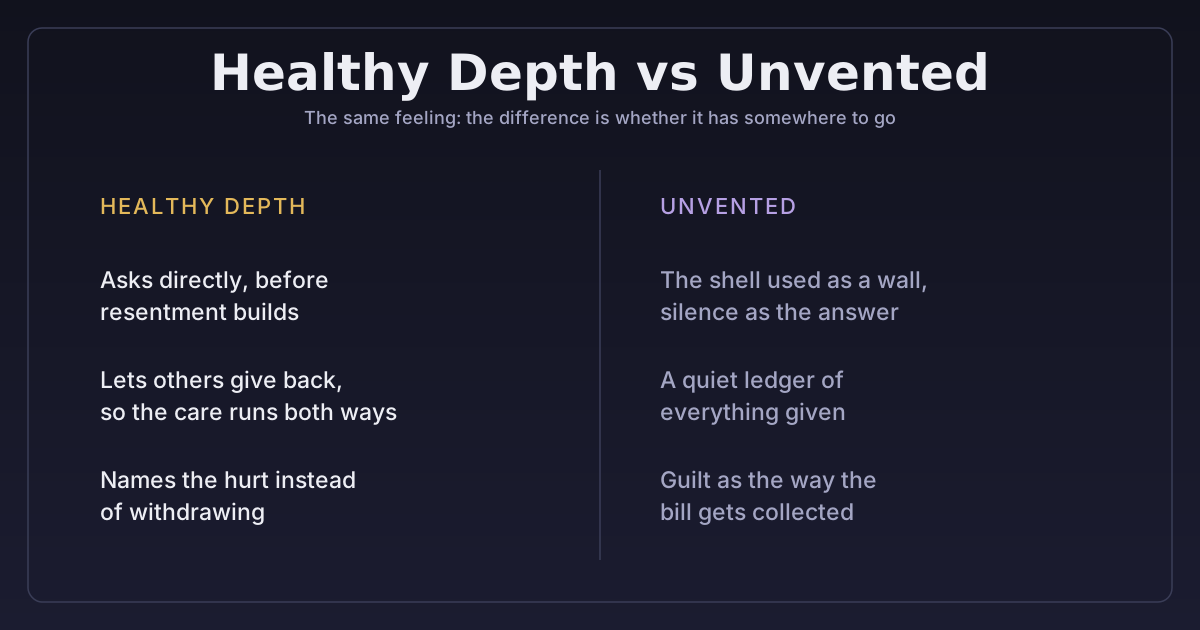
Healthy Depth vs Unvented
The line between the two is not how much a Cancer feels. It is whether the feeling has somewhere to go besides the shell and the ledger.
Handling it from the outside is covered above; the rest is Cancer's own to do.
For Cancer themselves: the most useful habit is asking directly for what you need before the resentment builds, while the request is still small. The second is letting people give to you, so the relationship is not a one-way flow you secretly resent. None of this requires feeling less. It requires giving the depth a vent that is not a wall.
Frequently Asked Questions
Why are Cancers so moody?
Cancer is ruled by the Moon, which moves through a new sign every couple of days, and the sign's feelings move with it like tides. The shifts are real but not random: Cancer also opens or closes its shell depending on whether it feels safe, so what looks like moodiness is often that protective switch responding to emotional information other people have not noticed.
Are Cancers manipulative?
Cancer is rarely calculating in the cold sense, but the guilt-tripping and the silent treatment can function as manipulation even when they are not consciously planned. The mechanism is usually fear of being left rather than a strategy to control. It still lands as pressure on the other person, which is why naming it gently and not paying it works better than either ignoring it or punishing it.
What is the toxic side of a Cancer?
The toxic side of Cancer is mostly its strengths without a vent: care that comes with a hidden invoice, the silent shell used as punishment, grudges that never close, nurturing that tips into control, and sensitivity that makes everyone around them edit themselves.
Do Cancers hold grudges?
Yes, often for a long time. Cancer's memory keeps emotional wounds vivid in a way many signs do not, partly as protection against being hurt the same way twice. They can forgive eventually, but they rarely forget, and an unaddressed grudge can stay ready to resurface in conflict for years.
How do you deal with a Cancer's dark side?
Reassure them genuinely, since most of the shadow is fear of abandonment. Go find them when they retreat over something that matters, but do not let the silent treatment become the way every disagreement gets handled. Name guilt-trips kindly and directly instead of paying them, and never condescend, because that closes the door fastest.
Is Cancer the most sensitive sign?
Cancer is frequently named the most emotionally sensitive sign, and as a Moon-ruled water sign that is a fair reputation. Sensitivity itself is not the problem; it is the engine behind Cancer's real strengths. It only becomes a liability when it has no outlet and turns into the shell, the grudge, or the guilt.
Can a Cancer change their dark side?
Yes, and it does not require feeling any less. The whole shift rests on one skill: giving the depth a vent that is not the shell or the ledger. A Cancer who can ask directly for what they need before the resentment builds, and let people give back rather than keeping the flow one-way, keeps the loyalty and care without the hidden invoice. The pattern is stubborn because it started as protection, but it is a habit, not a fixed trait.
Somewhere for the Depth to Go
The dark side of Cancer is the cost of deep feeling with no vent rather than a flaw bolted onto a loving sign: the same care, loyalty, and memory that make Cancer worth building a life with, curdled into guilt, grudges, and a shell used as a wall. Cancer who give the depth somewhere to go (asking directly, letting others give back, naming hurt instead of withdrawing) keep everything good about the sign without the hidden invoice. The ones who never do tend to end up loving, devoted, and quietly resentful behind a closed door.
For practical ways to work with these patterns, not just name them, see the Cancer remedies toolkit. For the gentler, deeper practice of facing these parts, see shadow work in astrology. For the full sign, see the complete Cancer personality profile and the Cancer soulmate guide, and for the steadiest water-meets-earth pairing, the Taurus and Cancer compatibility guide.
For entertainment and guidance purposes only. Astrology is not a substitute for professional medical, psychological, financial, or legal advice. The patterns described here are generalizations and may or may not apply to any specific person, whose full birth chart involves rising sign, moon sign, and planetary placements not covered by sun-sign alone.